Deep science
Deep science: Parque de la Salud across disciplines
As an independent non-profit guide, we go beyond the surface. The four modules below read the park through botany, therapeutic landscapes, microclimate and cultural geography.
01Botany
Botany and Asunción's urban ecology
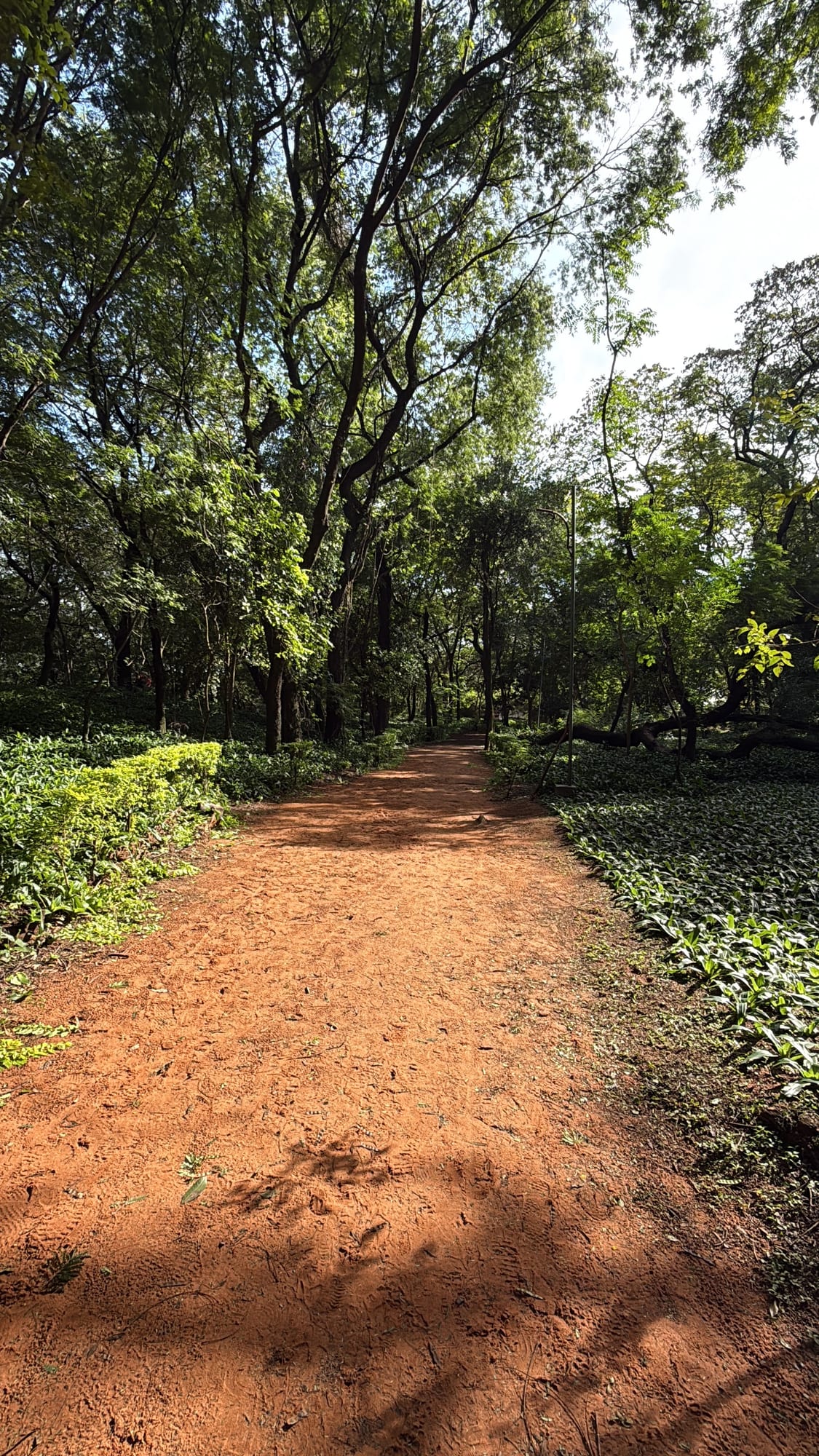
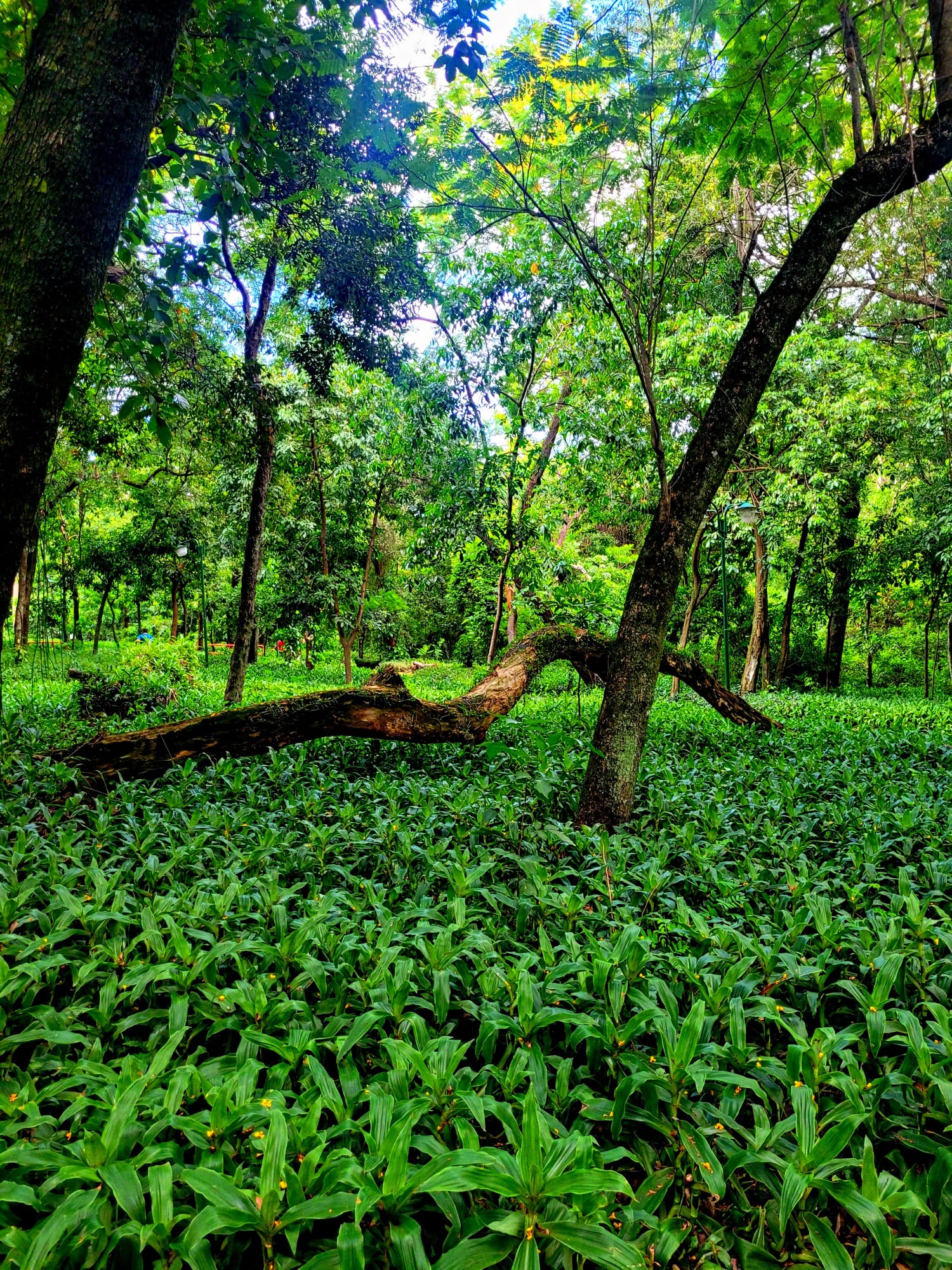
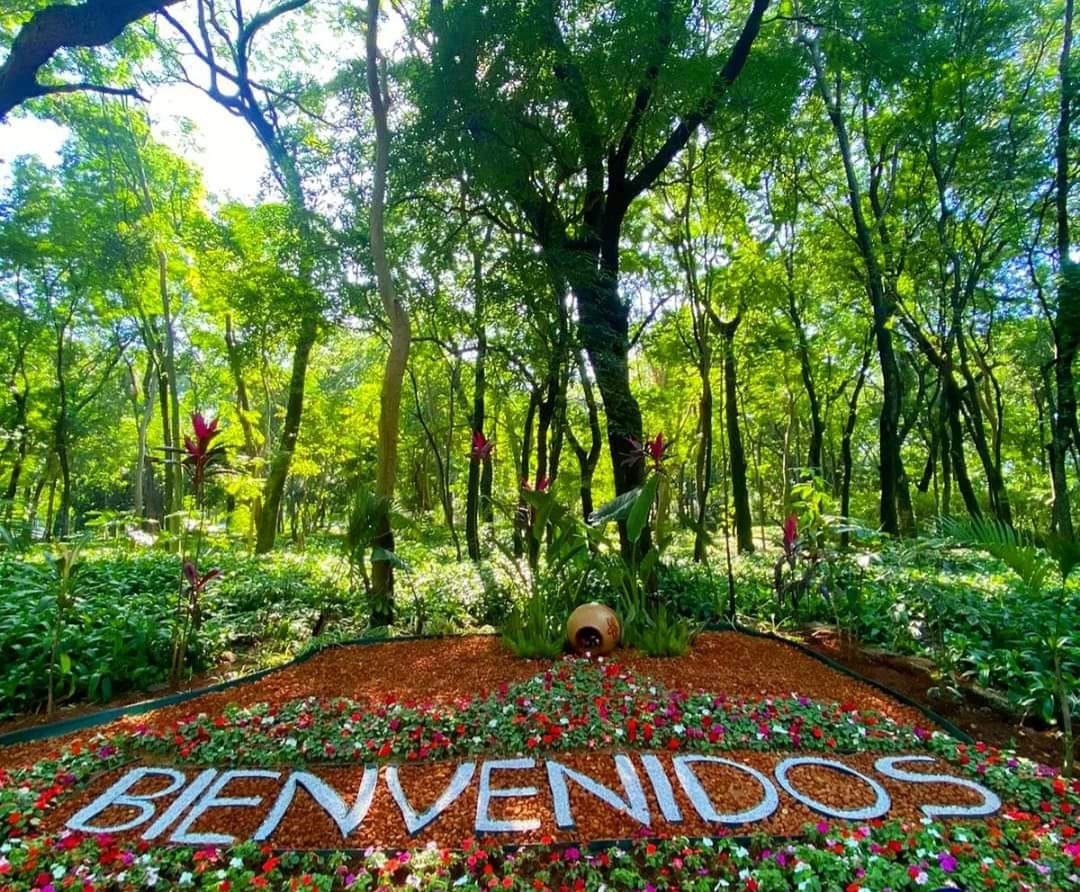
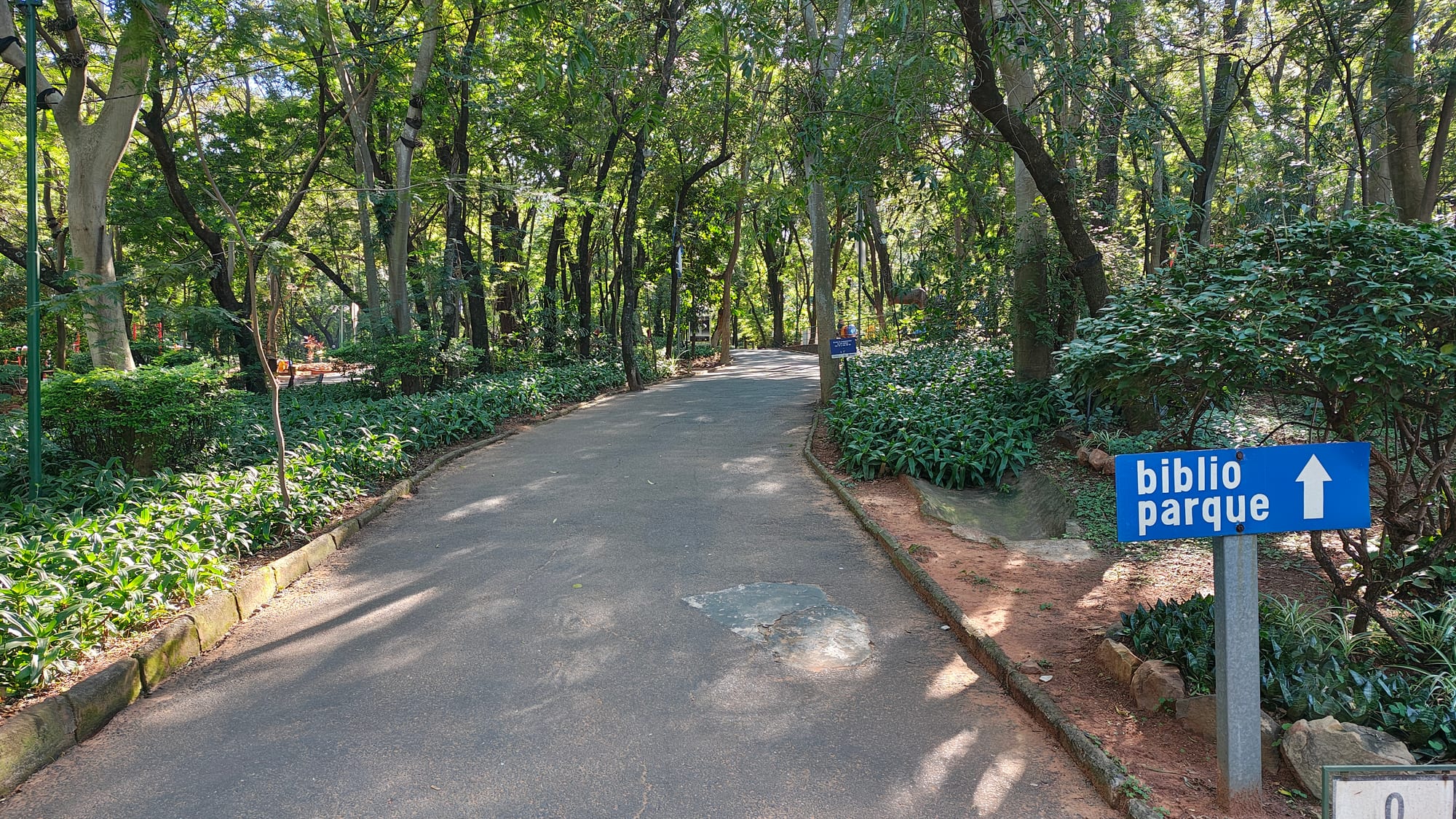
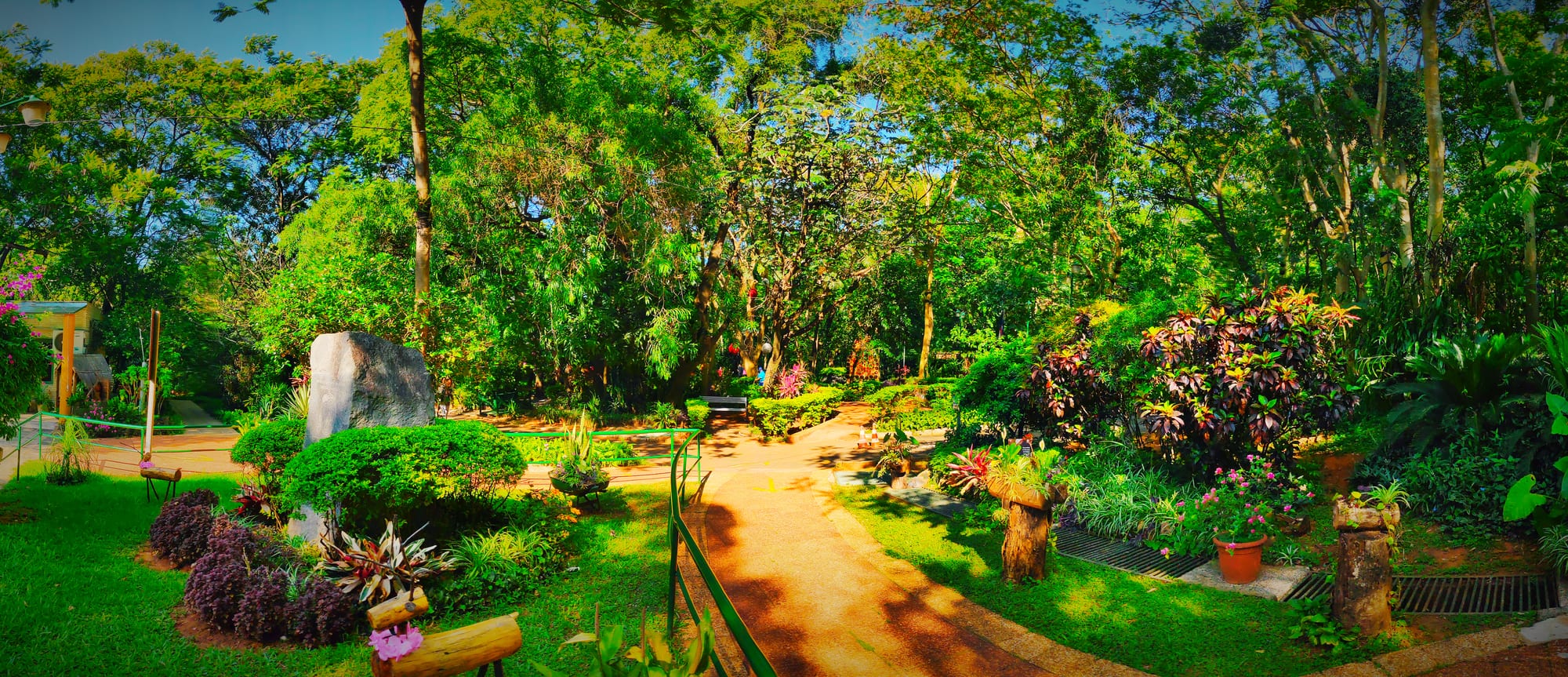
Parque de la Salud is more than 'trees and grass'. Through urban ecology it reads as a living sample embedded in Asunción's dense fabric — a preserved urban remnant of the South American Atlantic Forest (Bosque Atlántico).
Native vegetation and species diversity
The park preserves native Paraguayan tree communities, including the Tajy — the pink trumpet tree (Lapacho), among Paraguay's national trees. Under the humid subtropical climate these trees follow clear phenology: a concentrated flowering from late dry season into spring, feeding pollinators and adapting well to local soils.
An urban biological corridor
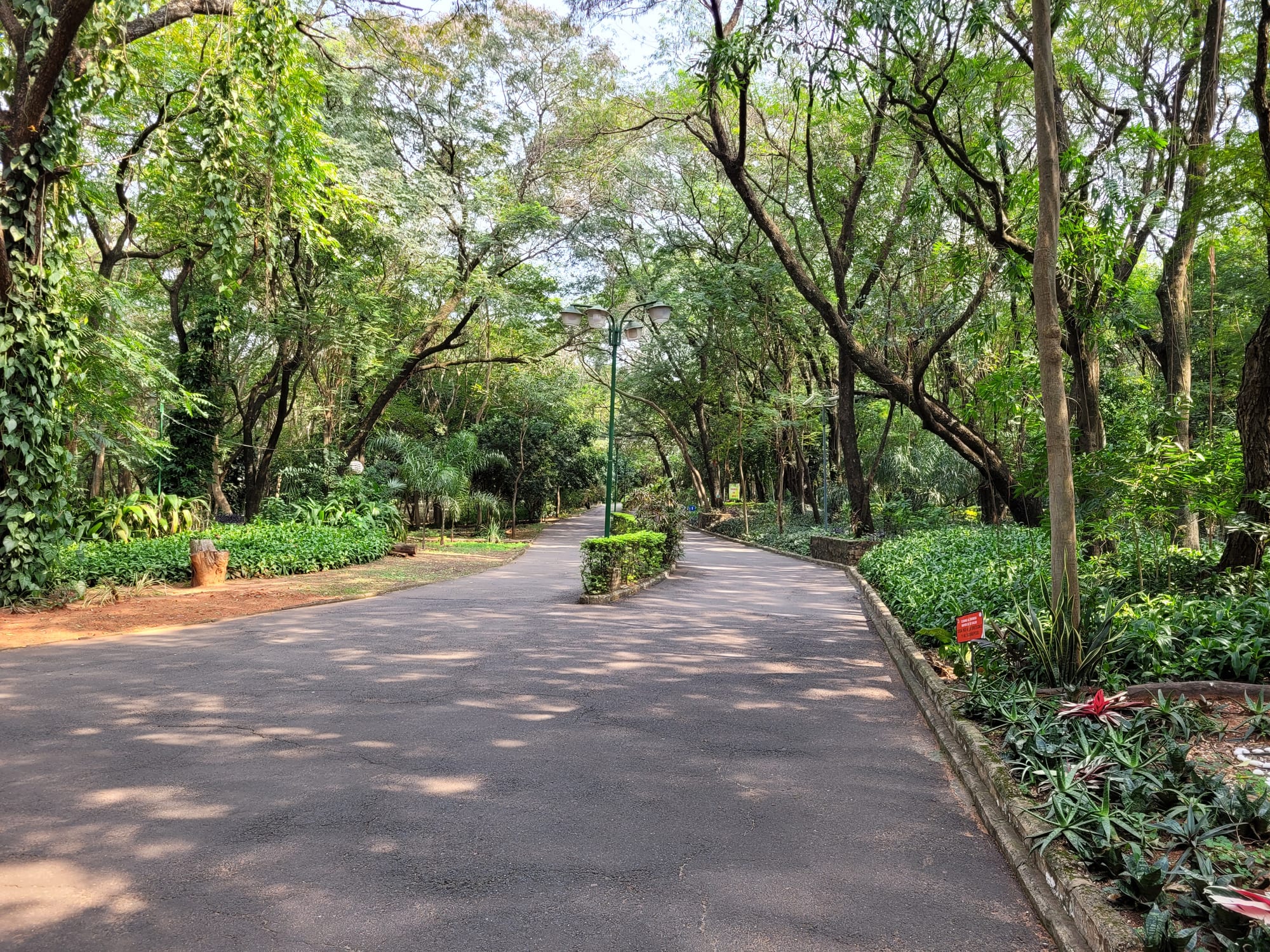
Together with green spaces such as the Jardín Botánico, the park forms a migration corridor and refuge for urban wildlife — birds, pollinators and small mammals. In a capital of concrete blocks, this continuous green acts as a biodiversity 'stepping stone'.
Balancing native and introduced species
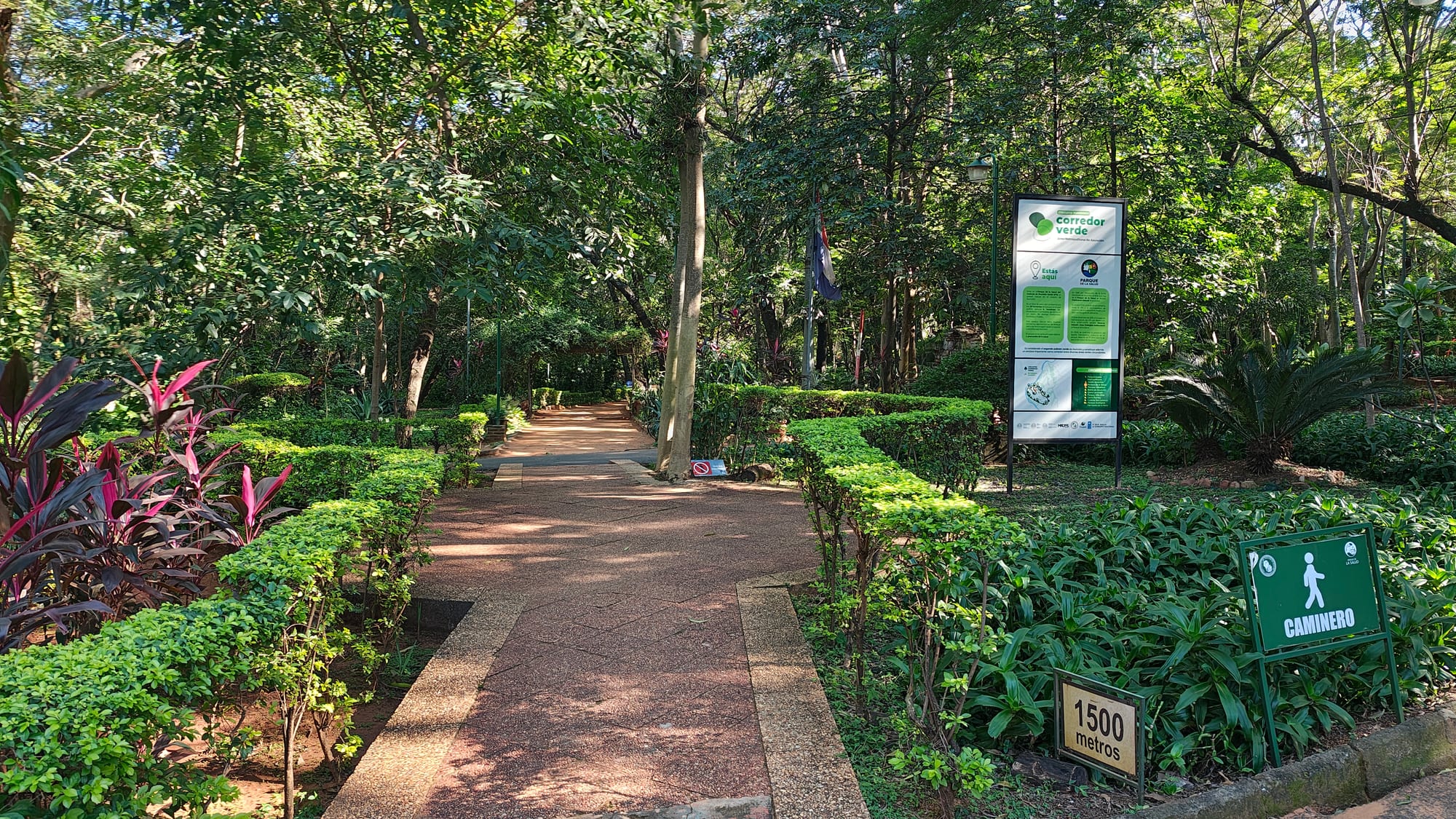
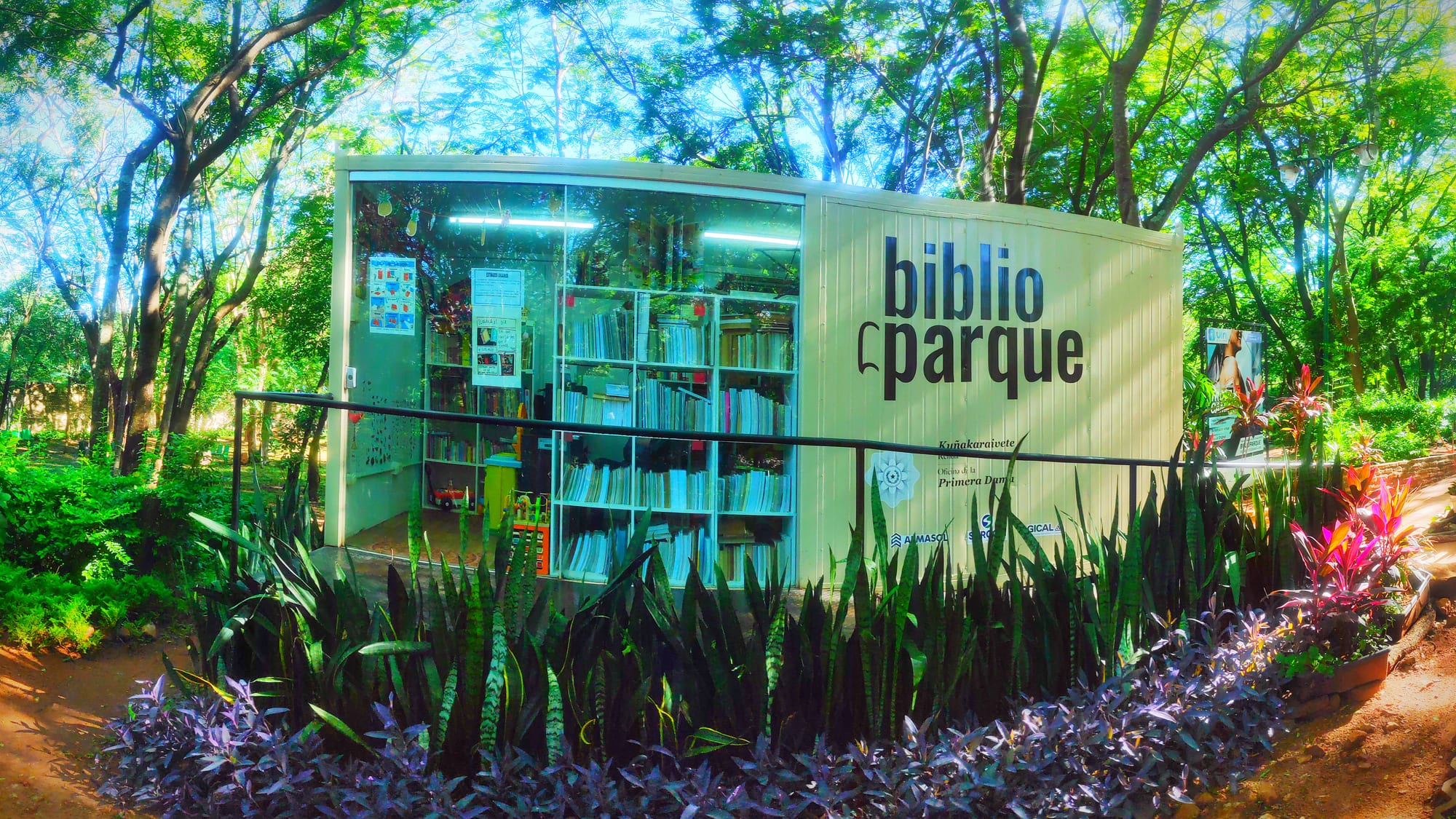
As a managed urban park, its vegetation system must actively prevent invasive species and keep native communities healthy. An on-site nursery (Vivero) propagates trees, ornamentals and native medicinal plants, and botanical labels along the paths are an entry point to public nature literacy.
02Healing landscapes
Healing landscapes and medical architecture
The word 'Salud' is not decoration. Two threads — environmental psychology and public-health history — reveal the deeper logic of the park's design.
Therapeutic garden design
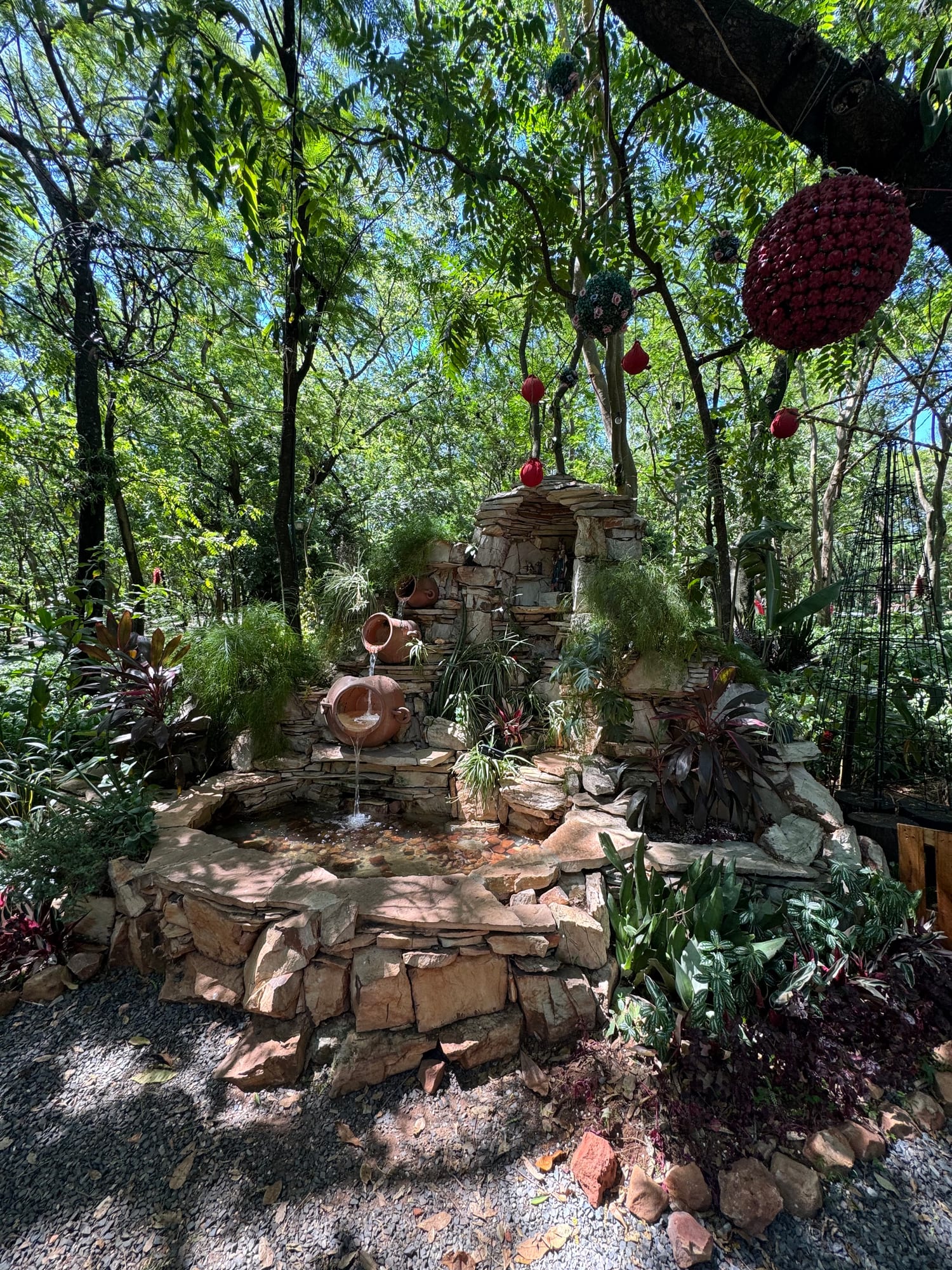
Path materials, colour palettes, aromatic plants and the sound of nearby water are arranged by environmental-psychology principles to lower anxiety, heart rate and blood pressure for recovering patients and visitors. This is therapeutic-landscape practice that treats nature as 'passive medicine'.
From 'cure' to 'prevention'
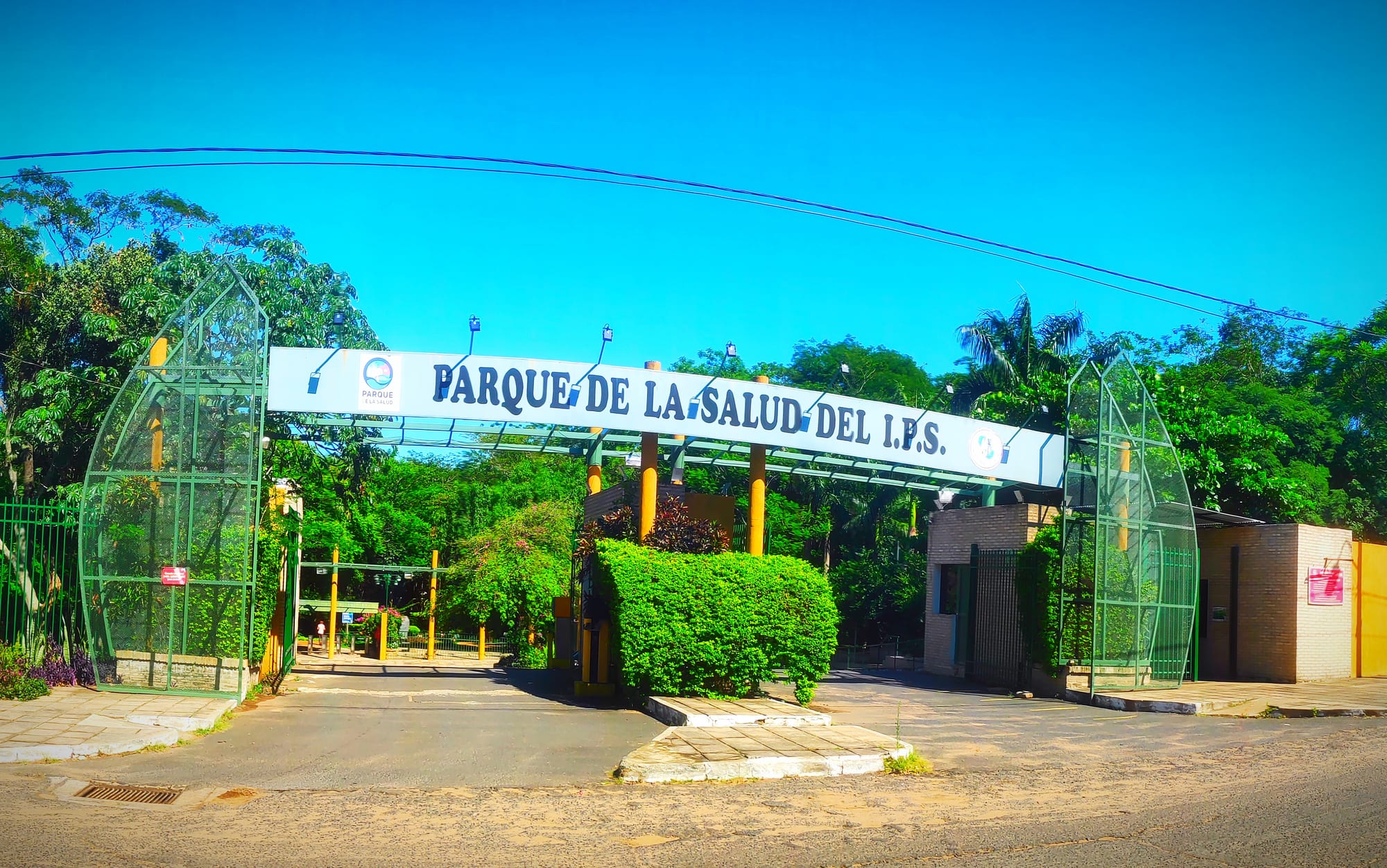
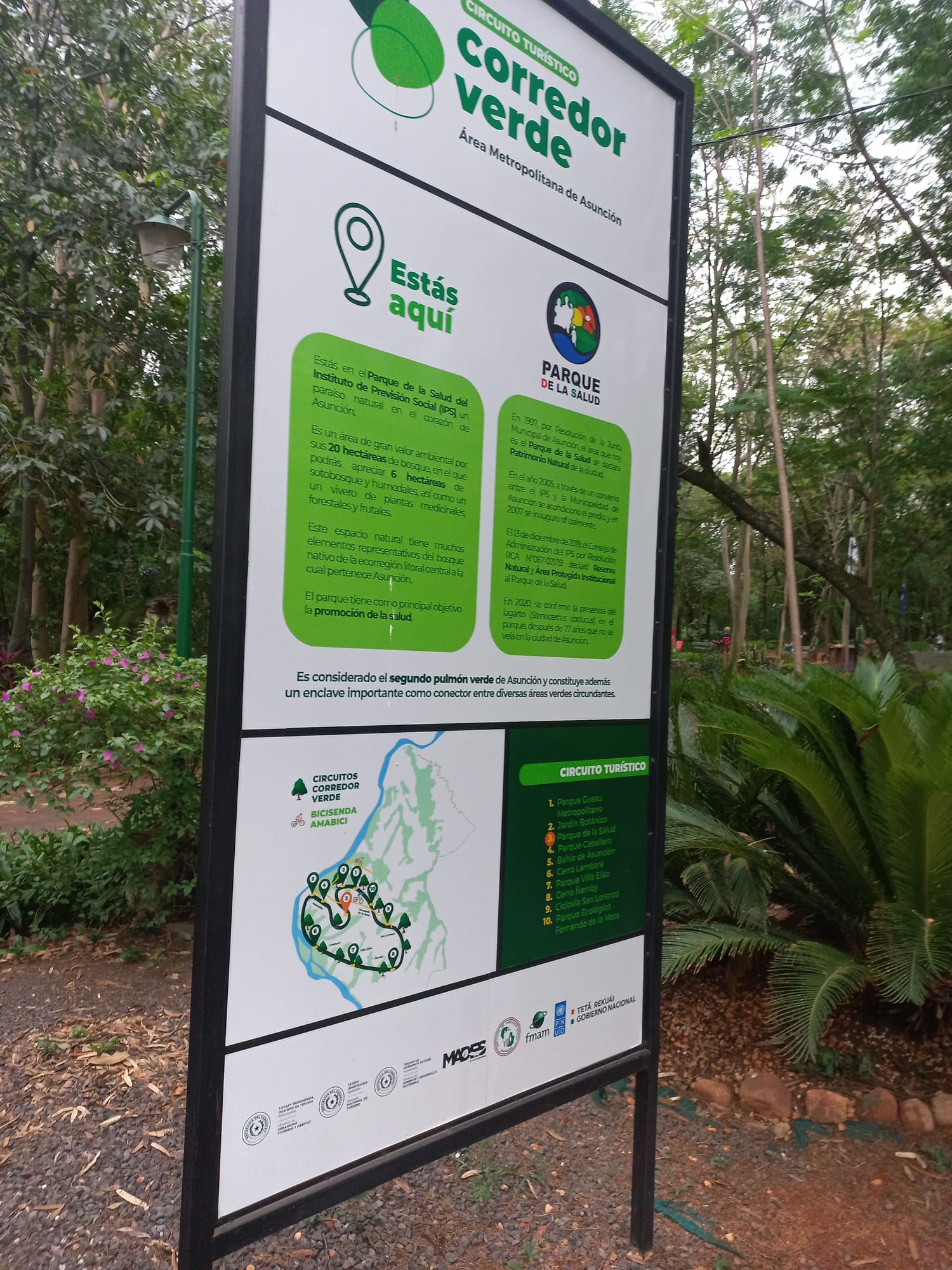
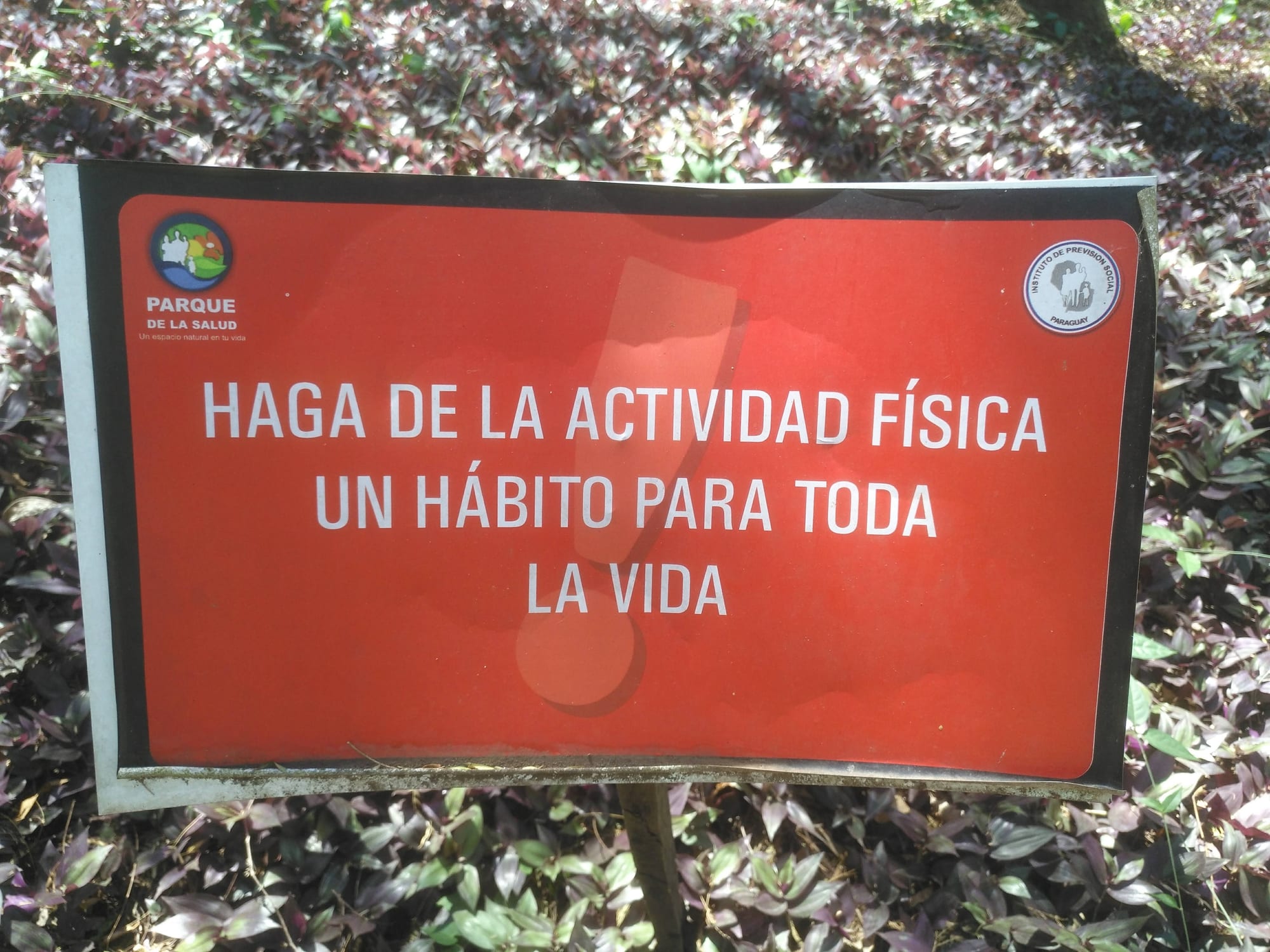
Inaugurated by Paraguay's social-security institute (IPS) on 14 December 2007 in Barrio Santo Domingo, beside the IPS Central Hospital, the park signals a shift in public health from 'disease treatment' toward 'prevention and wellbeing' made tangible in space.
A car-free space for recovery
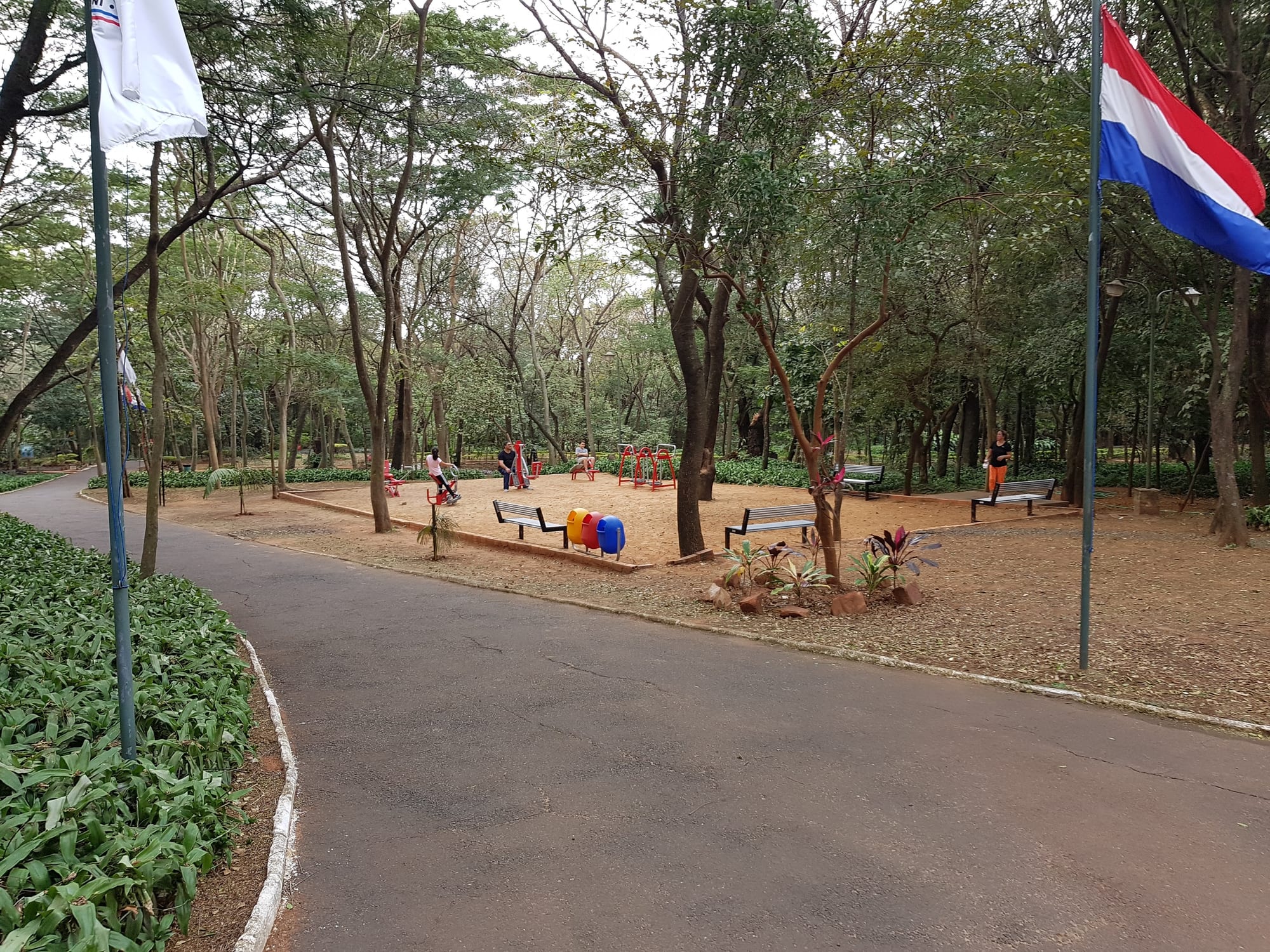
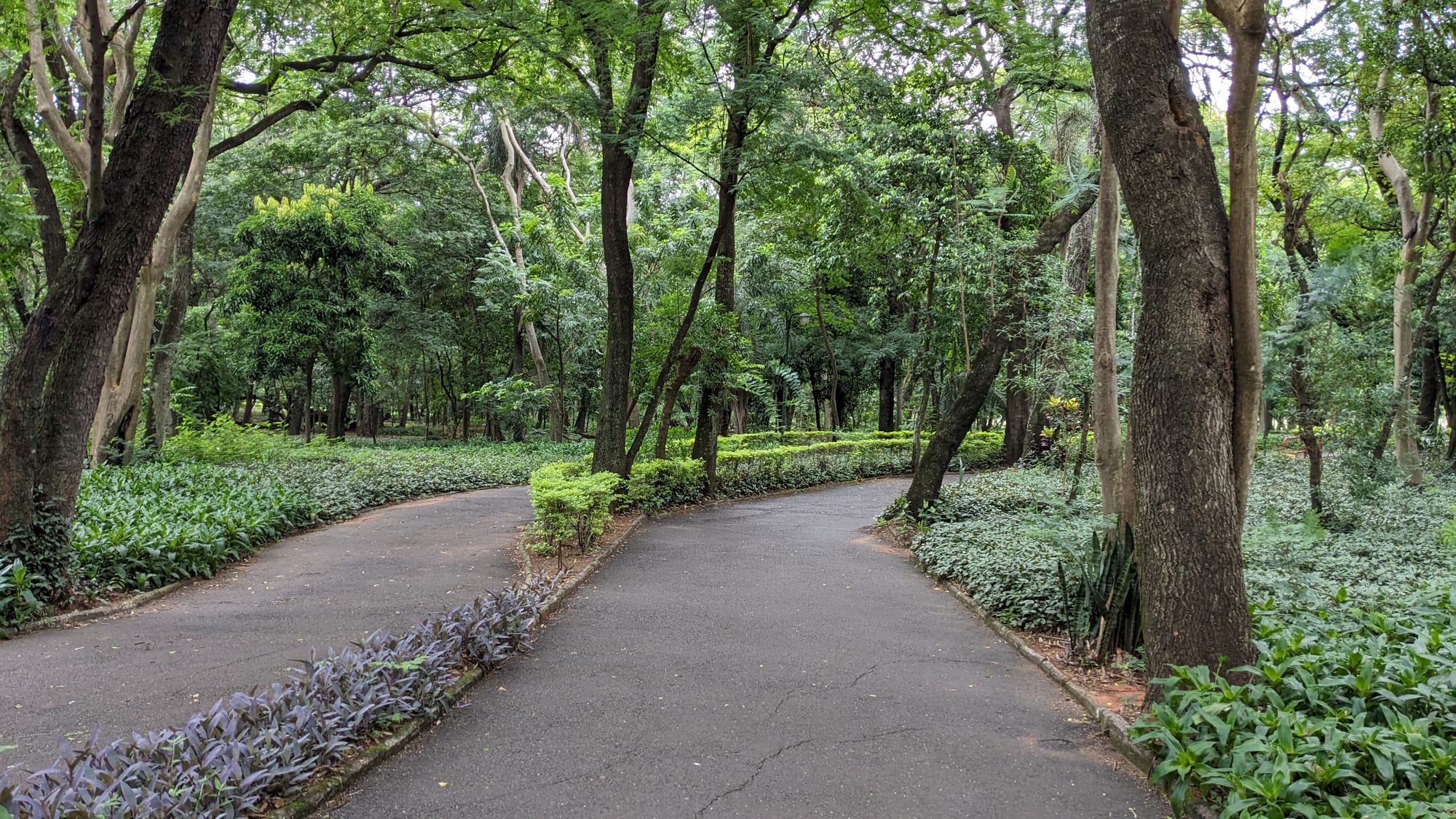
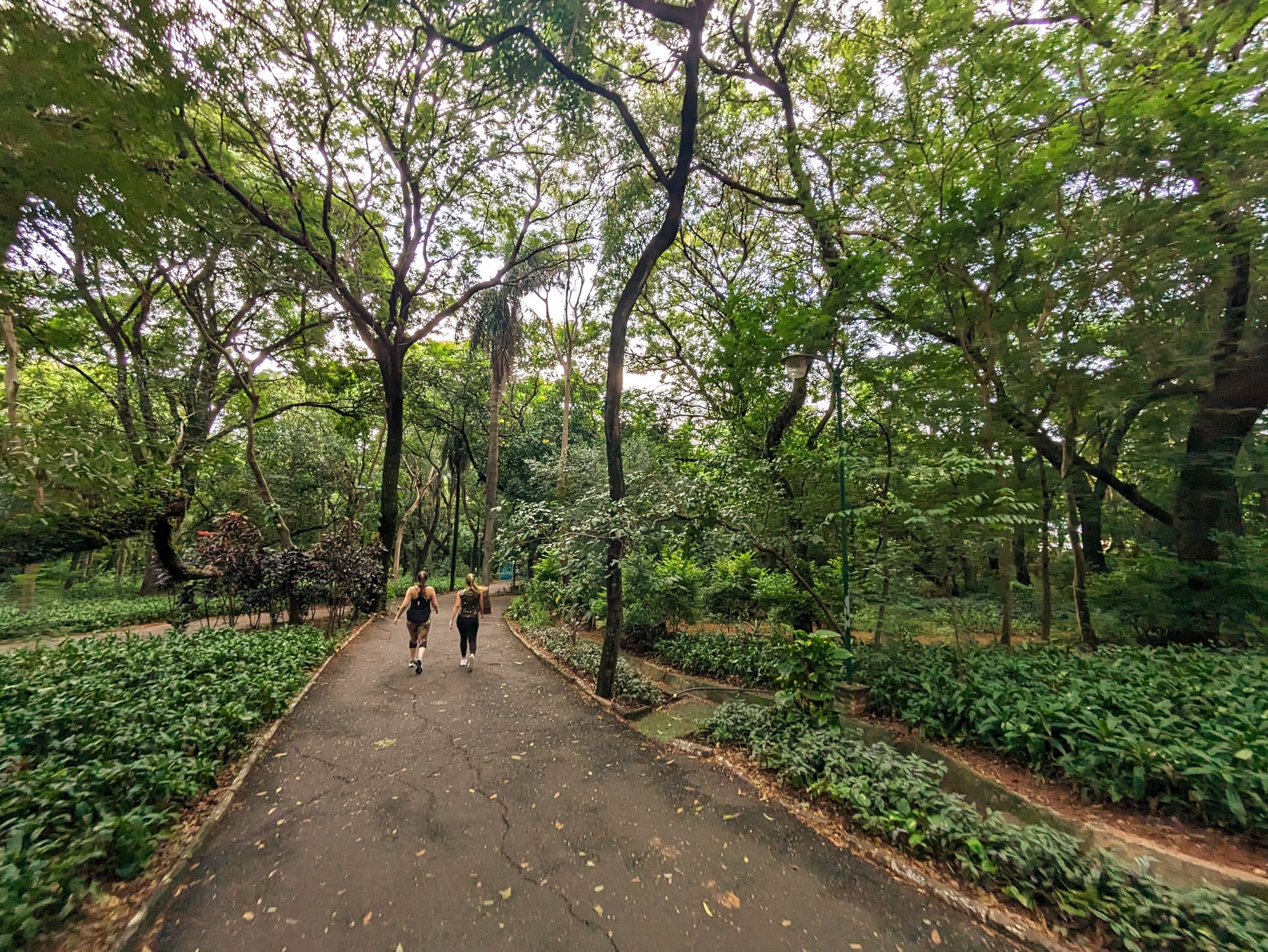
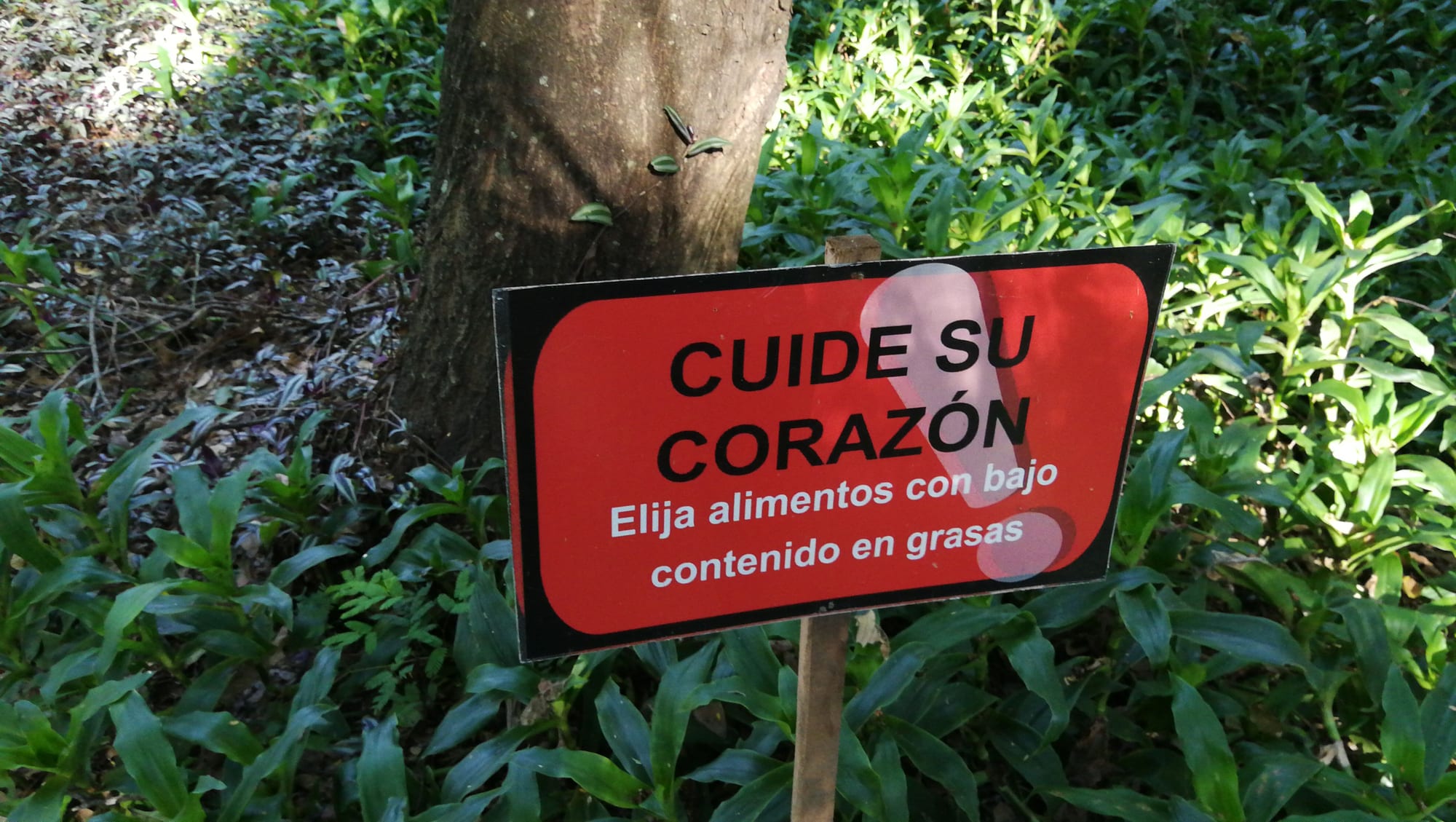
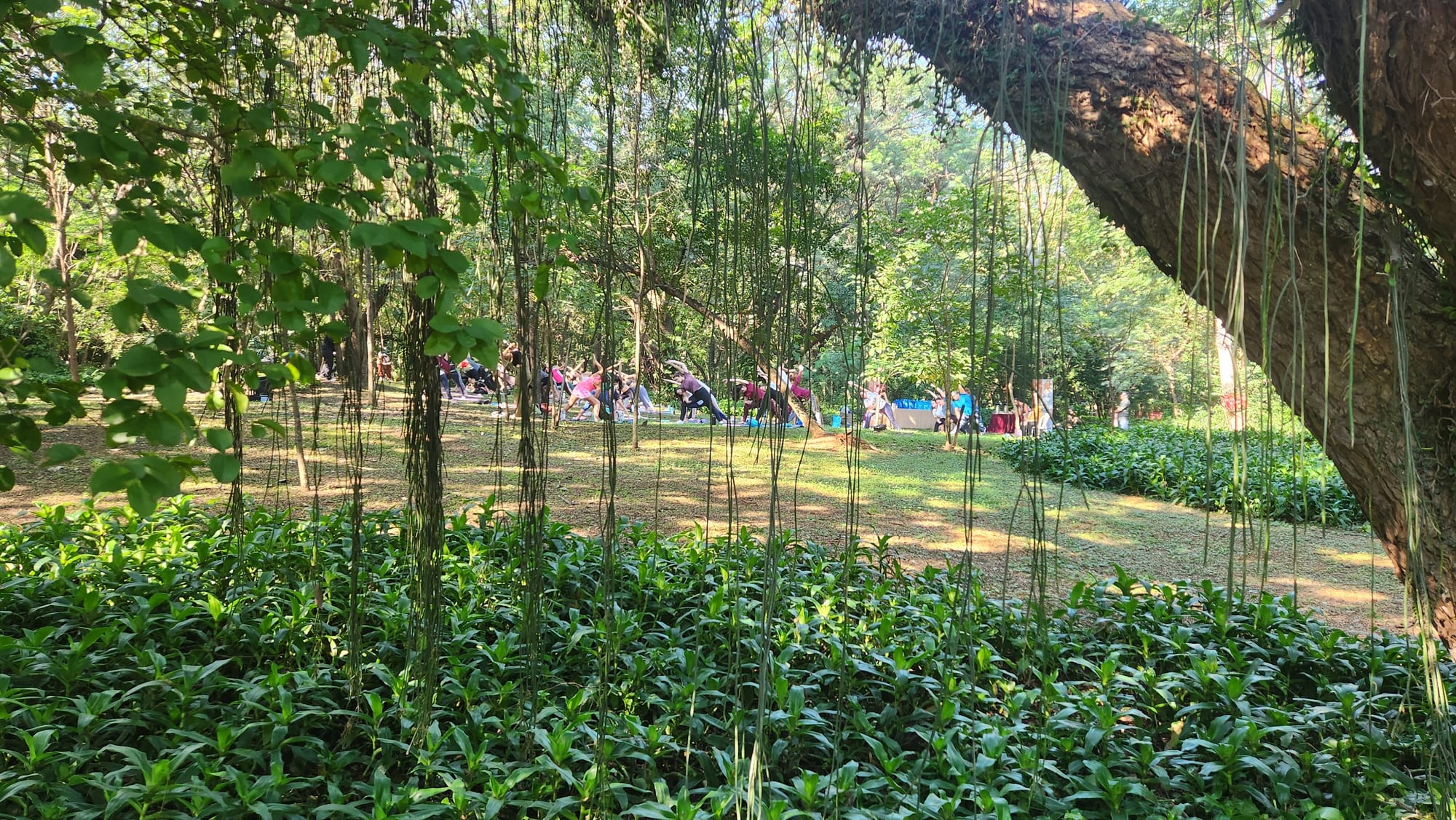
To protect recovering patients, members of the Vida Plena senior club and ordinary walkers, the park enforces strict pedestrian-only management — bicycles are banned. A nursing post (Puesto de enfermería) offers free blood-pressure, glucose and weight checks, weaving prevention into the green space.
03Microclimate
Microclimate and hydrology
As the second-largest green space after the Jardín Botánico, Parque de la Salud plays an 'infrastructure' role in the city's meteorology and water management.
Cooling the urban heat island
Dense canopy transpires continuously, carrying heat away and producing a clear 'cold-island' effect amid the hardened surrounding blocks, softening the high temperatures and discomfort of the urban heat island (UHI).
An urban sponge for stormwater
Asunción gets heavy summer storms. Permeable surfaces, lawns and deep-rooted plants absorb rainfall like a sponge, delaying surface runoff and easing pressure on the neighbourhood drainage system — a low-cost nature-based solution.
Soil and geological substrate
About 6 hectares of virgin natural vegetation (Vegetación natural virgen) are protected as a Natural Reserve (Reserva Natural) and urban natural heritage (Patrimonio Natural) by the municipality and IPS. The deep soil layer and root network are the geological basis for its ecological and hydrological function.
04Linguistics
Linguistics and local cultural geography
Pairing Spanish with Guaraní (Avañe'ẽ) etymology while explaining plants and animals lets us see the deeper indigenous understanding of nature.
Nature cognition in two languages
In Guaraní the pink trumpet tree is called Tajy — such indigenous words often condense long observation of a species' phenology, uses and ecology. Bilingual plant labels are both language preservation and a richer form of science communication.
Pre-industrial land use
Before the IPS health campus and the park, this land sat at the expanding edge of Asunción's urban fabric. Tracing its change from natural substrate to institutional green space is an essential page of local geographical history.
The cultural meaning of urban green
When a park is named 'Park of Health', it carries three intertwined narratives — public health, civic life and an indigenous language. This cross-disciplinary 'sense of place' is exactly what deep science communication hopes to convey.
As a non-profit attraction guide, this site prioritizes location, environmental context, transport, on-site photos, and official references over booking prompts or promotional language.